- Founders Pack Wolfcast: Learn from Unicorn Startups Before They Raise $1 💸
- Posts
- Robot Cowboys: The 19-Year-Old Who Fired the Helicopter
Robot Cowboys: The 19-Year-Old Who Fired the Helicopter
Sam Rogers grew up moving cattle on motorbikes and helicopters across a 6,000-head Australian station. Now his AI drones do it in three clicks. Y Combinator Winter 2026. $1.2M pre-seed. Backed by Tyler Bosmeny.
In partnership with

The ice cream shop that makes money when it's cold

28 Wishes sells ice cream in Los Angeles. Below 70°F, sales fall about 20%. The weather is out of their hands. Rent isn't.
So the owners started putting about $20 a day into Kalshi weather markets, taking the cold side. The days that keep customers away now pay something back.
This is hedging. Big companies have done it for decades, buying protection against bad weather, fuel spikes and rising rates. It used to take a broker, a trading desk, and an order size no corner shop could meet.
Kalshi opens it up. Contracts on weather, fuel prices, inflation, tariffs and regulation, starting at a few dollars. Take a position on the outcome that would hurt you. If it hits, the payout softens it. If it doesn't, the contract expires and the good month was the point.

North Queensland. Red dirt. Six thousand head.
A cattle station the size of a small country, moving its herd the same way it's been moved for a century. Motorbikes. Helicopters. Horseback. Hours a day. Every single day. Just to keep the cattle on fresh grass.
That's the world Sam Rogers grew up in. Half his life on the family cattle station. The other half building robots.
He was 19 when he dropped out of robotics at the University of Sydney — because he'd seen something the rest of the industry hadn't.
Moving cattle costs ranchers hundreds of thousands of dollars a year. In the US, it runs $10k to $1M per ranch. Skilled labor you can't find. Helicopters you can't afford. Expensive. Risky. Impossible to staff.
Sam asked the question every founder should ask: why is a man on a motorbike doing a job a machine could do better?
So he built the machine.
The hard part isn't the drone. It's reading the animal.
Brumby — launched as GrazeMate — turns off-the-shelf DJI drones into autonomous mustering robots. Three clicks on a phone. The drone flies to the paddock, positions itself around the mob, and moves them where they need to go.
But any idiot can fly a drone. The real craft is stockmanship. A good hand knows when a cow is about to break, when to push, when to back off. That instinct takes generations to learn — and it's exactly what's disappearing from the labor pool.
So Sam's team taught the AI to do it. Proprietary reinforcement learning models that respond to cattle behavior in real time, mimicking the stockmanship techniques that took his family a century to master. The system reads how your herd responds and gets sharper with every move.
That's the AI angle that matters. Not a chatbot. Not a wrapper bolted onto someone else's model. A model that reads living things and applies pressure like an experienced hand — calm, precise, patient.
Three-person team. PhDs and engineers who grew up on ranches. A 19-year-old CEO. 9,650 testing missions already completed across Queensland. Herds up to 2,000 head.
"If we were doing everything we do, would we choose to do it again from zero?"
— Garry Tan, via TheFoundersPack
Look at what he actually built. Because this is a pack story — and it always is.
The pack he's herding isn't the cattle. It's the humans.
The mastermind: his family's 6,000-head operation — the living laboratory every model trains on. Plus a YC batch that voted him one of the companies to watch. Plus Tyler Bosmeny, the partner who backed him.
The partners: the ranchers, the grazing operations, the ranch managers running rotational grazing. He's onboarding them as early partners right now — in the US and Australia — because every pilot makes the model smarter and every ranch that switches becomes a channel to the next one.
The community: the cattle agents, feedlots, processors — the whole supply chain that moves beef from paddock to plate. When they standardize on the same herding system, they all move faster.
And the shared asset? The data. Every mustering mission teaches the model how cattle behave. One ranch's data makes every other ranch's drones smarter. That's the keiretsu move — the same play Form Your Own Pack lays out. Build the asset once. Let the whole pack feed it.
A lone rancher with a drone is a guy with an expensive toy. A rancher with a pack — drones, data, partners, community — just fired the helicopter, the motorbike, and the labor problem in one move.
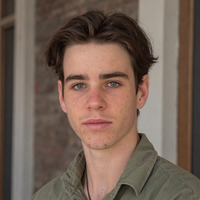
Sam Rogers — Founder/CEO, Brumby
Half his life on a cattle farm, the other half building robots. Dropped out of robotics at the University of Sydney. LinkedIn | @GrazeMateInc
Brumby is the same shape as any pack: a small team betting on a vision, using AI to do what used to take a crowd. If you want to see that shape in filmmaking, try Genflick — the AI filmmaking agent that lets a three-person crew shoot what used to need thirty. Free to start at genflick.com.
Links: YC Profile | Website | @GrazeMateInc | Demo Day Video | Partner: Tyler Bosmeny
Join the Pack
Read Form Your Own Pack: How a Forgotten Japanese Business Model Teaches Startups About the Power of Cooperation.
The ideas in this newsletter come from Form Your Own Pack — the book that started it all.
Get the Book on Amazon →