- Founders Pack Wolfcast: Learn from Unicorn Startups Before They Raise $1 💸
- Posts
- Four Dresden Kids Are Building the Rocket Europe Swore It Didn't Need
Four Dresden Kids Are Building the Rocket Europe Swore It Didn't Need
Charlie Weise, Paul Kunhart, Felix Kelm and Matty Driesnack met in a lecture hall. Two years later they were in Silicon Valley with an engine that throws away 90% of the parts.

Ninety percent.
That is how many parts the four founders of RATLOG threw in the trash. Every bolt, valve and seal that a rocket engine does not actually need. Gone. The engine they are left with uses up to 90 percent fewer components than anything flying today.
I first heard the name in a press release out of Saxony that smelled like machine oil and cheap coffee. Four students at TU Dresden. One engine. No factory, no fortune, no army of engineers. Just a welding torch and a hunch that European rocketry had been solving the wrong problem for thirty years.
So I went looking. This is where it gets strange.
Four Kids and a Cruise Missile
Charlie Weise and Paul Kunhart were studying aerospace engineering. Felix Kelm was doing electrical engineering. Matty Driesnack was doing business administration. Not one of them had ever run a company.
What they had was weirder than a resume. Charlie and Paul had designed rocket engine nozzles for the European Space Agency's Argonaut lunar lander, inside TU Dresden's Aerospace Institute. Paul was a student building hardware for a Moon mission. On a laptop. Between lectures.
Then Charlie, Felix and Paul did something even less sensible. They co-founded Innuendo, a startup building an air-breathing cruise missile powered by a rotating detonation engine. A detonation engine. The kind of propulsion that the big primes file under "theoretically possible, call us in 2040."
Felix, meanwhile, was laying out circuit boards for medical devices, and he helped build a printable patch for blood glucose monitoring at the university's Institute of Fine Measurement Technology. Rocket missiles on Monday. Diabetes tech on Tuesday.
Here is the part that made me put down my drink. Within a few months of founding RATLOG in 2025, they built a functional prototype and ran a successful hot-fire test. Hot fire means you strap your engine to a stand, light it, and pray the stand outlives the engine. It did. The engine did too.
Then customers started sending letters of intent for launch slots on a rocket that does not exist yet.
The Old Guard Has a Launch Problem
329 attempts to reach orbit in 2025. The most in human history. SpaceX flew about half of them, because SpaceX is the only company on Earth that routinely lands a booster and flies it again.
Europe has nothing reusable in service. Not one orbital rocket you can bring home and refuel. Satellites that need a ride are queuing for years, begging for a slot like it is 1974 and the only way up is a government flight manifest.
Isar Aerospace got a Spectrum rocket off Norwegian soil in September and put satellites in orbit, the first commercial launch from mainland Europe. A genuine triumph. It is also built for small payloads, and it does not come back. Europe climbed one rung of the ladder SpaceX left behind a decade ago.
RATLOG's bet is that the ladder itself is the problem. If your engine needs thousands of parts, you need a supply chain the size of a small city, and you will always be slow and expensive. If your engine needs 90 percent fewer parts, you can iterate like a software team. Simpler to build. Cheaper to build. Faster to build again after it comes back scorched.
Four people. That is the whole company. To be fair to Apollo, putting a man on the Moon took 400,000 people and 20,000 companies. RATLOG takes the same physics and runs it through a laptop. It is not smaller genius. It is the same genius, concentrated.
"If we were doing everything we do, would we choose to do it again from zero?"
- Garry Tan, via TheFoundersPack
That is the entire RATLOG thesis in one line. They did not iterate on the V-2. They did not iterate on the Ariane. They asked what a launch vehicle looks like if you start from zero and refuse to carry the ancestors. Answer: a tenth of the parts.
The Pack That Built the Pack
Now the real story, and it is not the engine.
Charlie and Matty did not meet in a startup incubator with free kombucha. They met at the YETI Fellowship, a Dresden entrepreneurship school. That is the pack that handed them to each other. Thomas Kirchner backed the early version of this thing before there was a thing.
Matty did something else while he was studying. In October 2025 he founded Dresden DeepTech Connect, a monthly meetup that pulls 60-plus founders, investors and scientists into one room. Sixty people who would otherwise be alone in a cold city, arguing with a whiteboard. If you have read Form Your Own Pack, you already know this room. The Japanese keiretsu presidents called it the Lunch Club. Every Friday. Same table, same faces, cross-shareholdings and shared talent on the menu. Matty built a Lunch Club in a city that lost half its industrial identity when the Wall came down.
Then Y Combinator, the biggest Lunch Club on the planet, wrote a $500,000 check and pulled all four of them to San Francisco. Their YC partner is Kulveer Taggar.
Do the math on the chain. A university research institute in Dresden. A fellowship that introduced the co-founders. A meetup that wired them into the local deep-tech pack. An accelerator that pooled them with 200 other founders and a check. Nobody in this story did it alone. The lone wolf is a myth, and this is four wolves who each brought a different set of teeth.
And the product itself is the pack idea made of metal. A reusable rocket is not owned by one launch. You amortize the beast across a hundred customers. Shared infrastructure, paid down by everyone who rides it. That is what form-your-own-pack looks like at 400 feet and burning.
Same shape as any pack, incidentally, just in a different medium: a small team betting everything on one vision and asking the crowd to come along. If that instinct is your thing, try Genflick. It is an AI filmmaking agent that takes a script and turns it into a finished film, no crew, no studio, no permission slip. Four kids, one rocket engine. Four people, one feature film. The ratio keeps dropping.
The Crew

Charlie Weise - Founder/CEO. YETI G1 Fellow. Designed research for ESA's Argonaut Moon lander at TU Dresden. Co-founded Innuendo. @_charlieweise | LinkedIn
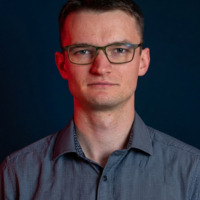
Paul Kunhart - Founder/CTO. Designed rocket engine nozzles for ESA's Argonaut lunar lander. Led engine design on an RDE-powered cruise missile at Innuendo. Aerospace Engineering, TU Dresden.

Felix Kelm - Founder/Engineering. Electronics Lead at Innuendo. PCB design for medical devices, plus a printable glucose-monitoring patch at TU Dresden. LinkedIn

Matty Driesnack - Founder/COO. Early hire at Lio (YC S23). Financial Accounting Advisory at EY. Founded Dresden DeepTech Connect. @MattyDriesnack | LinkedIn
Links: YC Profile | RATLOG on LinkedIn | Partner: Kulveer Taggar
Demo Day is December. Watch the sky over Dresden.
Join the Pack
Read Form Your Own Pack: How a Forgotten Japanese Business Model Teaches Startups About the Power of Cooperation.
The ideas in this newsletter come from Form Your Own Pack - the book that started it all.
Get the Book on Amazon →